Medical Detox Center: Drug & Alcohol Withdrawal Management
24/7 Nursing | Joint Commission-Accredited | Incidental Medical Services (IMS) Certified
Safe Haven Recovery provides medical detox in Beverly Hills for adults seeking medically supervised drug and alcohol withdrawal management in Los Angeles. Our program combines individual assessment, monitoring and symptom-management support in a private residential setting. Explore the substance-specific detox options below, then contact admissions to discuss assessment, insurance and next steps.
Withdrawal doesn’t have to be painful. At Safe Haven Recovery, we provide a medically supervised detox program in a private Beverly Hills estate serving the greater Los Angeles area. Our board-certified medical team utilizes advanced symptom-management protocols to ensure your physical safety and comfort while you stabilize from alcohol and substance use.
With our medical detoxification program, we help clients detox from alcohol, opioids, prescription medications, stimulants, benzodiazepines, and more, ensuring comfort, monitoring, and support every step of the way. In our luxury Beverly Hills, CA setting, you’ll receive attentive medical care designed to ease withdrawal symptoms and prepare you for the next phase of recovery.



Safe, Comfortable Detox in a Private Setting
Many people delay treatment because they fear the physical symptoms of stopping. Our program is designed to minimize discomfort. We utilize FDA-approved Medication-Assisted Treatment (MAT) to alleviate cravings, reduce anxiety, and stabilize your vitals, allowing you to rest and recover in a non-hospital setting.
Key Medical Features:
24/7 Nursing Oversight: Continuous monitoring of heart rate, blood pressure, and hydration.
Comfort Medications: Prophylactic protocols to prevent seizures, nausea, and insomnia.
Private Detox Suites: Recover in a luxury bedroom, not a hospital ward.
Substance Use Disorders We Treat
Signs You May Need Medical Detox:
Detoxing at home can be dangerous, especially for alcohol and benzodiazepines. If you recognize these signs, medically supervised withdrawal is strongly recommended for your safety:
Physical Dependence: You experience shakes, tremors, heavy sweating, or nausea when you haven’t used for a few hours.
Tolerance & Maintenance: You need significantly more of the substance to feel “normal,” or you find yourself using throughout the day just to avoid sickness.
Blackouts & Severe Symptoms: You experience memory gaps (blackouts), fainting, or heart palpitations during use or withdrawal.
Polysubstance Use: You are using multiple substances simultaneously (e.g., alcohol and opioids), which complicates withdrawal risks.
Co-Occurring Mental Health: You suffer from anxiety, depression, or trauma that worsens when you try to stop using.
History of Complications: You have experienced seizures or hallucinations during previous attempts to stop.

Why "Cold Turkey" & At-Home Detox Can Be Dangerous
Attempting to detox without medical supervision is not just uncomfortable—it can be life-threatening. When the brain has become dependent on a substance, abrupt cessation can cause a rebound effect that shocks the central nervous system.
Alcohol Risks: Unmanaged alcohol withdrawal can lead to Delirium Tremens (DTs), fatal seizures, and cardiac failure. Medical prophylaxis is often required to prevent these outcomes.
Benzodiazepine Risks: Stopping Xanax or Valium abruptly carries the highest risk of grand mal seizures and acute psychosis. A slow, medically monitored taper is the only safe method.
Opioid Risks: While rarely fatal on its own, opioid withdrawal causes extreme dehydration and distress. The primary danger is the loss of tolerance; if a person relapses after a few days of “cold turkey” using their previous dose, the risk of fatal overdose is extremely high.
Medications & Medical Monitoring
Our detox team uses evidence-based protocols to manage withdrawal safely. When clinically necessary, short-term medications may be used to reduce symptoms, manage cravings, or stabilize vital signs.
Clinical support includes:
Round-the-clock monitoring
Daily check-ins with licensed providers
Symptom-based medication adjustments
Calm, controlled withdrawal support
Close oversight for benzodiazepine, alcohol, and opioid detox
MAT only when clinically appropriate (Buprenorphine or Naltrexone)
Every medication decision is individualized and focused on safety.
What's Included in the Medically-Supervised Detox Program?
Our Medical Detox program is designed to support individuals who are struggling with physical dependency on drugs or alcohol. Our Beverly Hills detox program provides a higher level of comfort, safety, and support than traditional detox centers.
Levels of Care
- Detox
- Residential Treatment
Benefits of Program
- 24/7 close medical supervision
- Withdrawal management & comfort medications (as clinically necessary)
- Vital sign monitoring & safety assessments
- Hydration, nutrition, and rest support
- Private, upscale residential accommodations
- Mental health and emotional support during early stabilization
- Holistic therapies (yoga, mindfulness, sauna therapy, breath work)
- A warm, attentive clinical team with decades of experience
- Customized Detox Plan
Duration of Stay
The length of detox varies depending on:
Type of substance
Duration and intensity of use
Physical health
Co-occurring mental health symptoms
Previous withdrawal history
Most clients stay in detox for 3–10 days, though some may require longer for full stabilization. Our team evaluates your progress daily and ensures you transition into the right level of care as soon as you are stable.

Who Is The Medical Detoxification Program For?
Our medical detox program is designed for individuals who are experiencing physical dependence on drugs or alcohol and require professional support to safely withdraw from these substances. This may include those with a long-term dependence or those who have had repeated unsuccessful attempts at quitting on their own.
It’s also a good option for anyone who wants to start recovery in a safe environment, with the goal of transitioning into a high-end residential treatment program in Beverly Hills for continued care in a luxurious setting.
Detox may be recommended if:
You have a physical dependence on drugs or alcohol
You’ve tried to quit on your own but experienced severe withdrawal
You need a safe, private place to stabilize
Your home environment is triggering or unsafe
You are preparing to enter residential treatment
You’ve been unable to stop using without medical support
Detox is a crucial step for many clients, helping ensure safety before beginning therapeutic treatment.
How do I start medical detox at Safe Haven?
Start with an admissions conversation about your substance use, medical history and mental health needs. Safe Haven provides medical detox in Beverly Hills and also has a residential treatment program. Discuss both the immediate detox assessment and the treatment you may need afterward.
For that conversation, have your current medication information, previous withdrawal or detox history, and insurance details available. Ask which level of care is recommended, what needs to be assessed before arrival, and what your expected personal costs would be. Confirm the arrival instructions before making travel arrangements.
See the admissions process · Explore residential treatment · Check insurance benefits
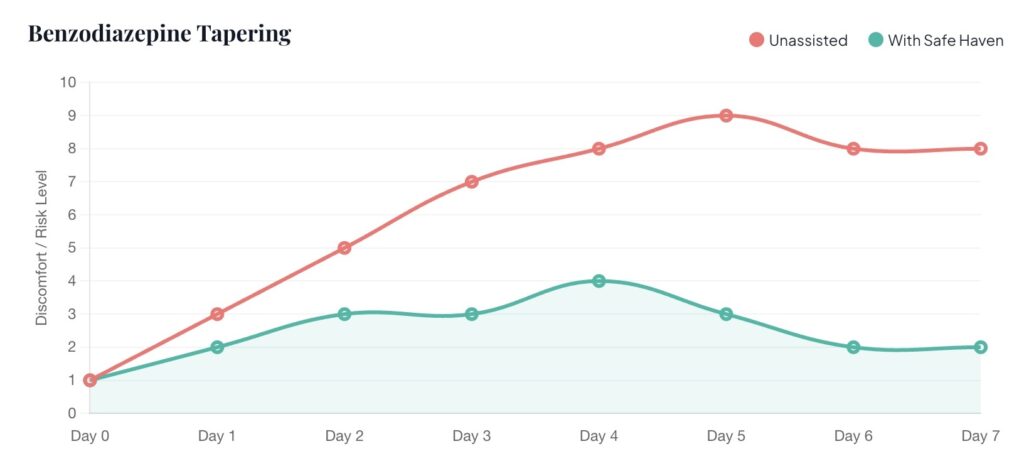
Visualizing Your Recovery
Fear of pain is the #1 barrier to treatment. Our medical protocols are designed to “flatten the curve” of withdrawal.
Select a substance to see how our medication-assisted treatment (MAT) protocols manage system spikes compared to unassisted withdrawal.


Your Medical Detox Timeline: What to Expect

Step 1: Evaluation & Intake (Hours 0-2)
Upon arrival, you undergo a comprehensive medical assessment. Our physician reviews your substance history and toxicity levels to create a personalized stabilization plan.
Step 2: Stabilization & Symptom Management (Days 1-3)
This is the acute phase. You receive 24/7 nursing care and medications to manage withdrawal peaks. Our goal is to keep you sedated enough to sleep and comfortable enough to eat.
Step 3: Clinical Transition (Days 4-7+)
As physical symptoms subside, mental clarity returns. We begin light therapy and introduce you to our residential treatment team to plan your transition into the next phase of recovery.
Specialized Detox Protocols for Substance Use
Alcohol Detoxification: Alcohol withdrawal can be life-threatening without medical supervision. We provide Benzodiazepine tapers and seizure prophylaxis to safely manage Delirium Tremens (DTs) and acute withdrawal.
Opioid & Fentanyl Detox: We utilize Buprenorphine (Suboxone) and other comfort meds to bridge the gap between dependence and sobriety, effectively reducing the “dope sickness” associated with Heroin, Fentanyl, and OxyContin.
Benzodiazepine & Sedative Detox: Withdrawal from Xanax, Valium, or Klonopin requires a slow, medically managed taper to avoid neurological complications. Our team specializes in long-term taper protocols for safety.
Polysubstance Detox: For clients using multiple substances (e.g., Alcohol + Cocaine), we develop complex medication management plans to address overlapping withdrawal symptoms simultaneously.
Luxury Amenities for Physical Restoration
Healing the body requires rest and nutrition. Unlike sterile hospital units, our Beverly Hills detox center offers a restorative environment designed to repair your physical health.
Chef-Prepared Nutrition: Organic meals designed to replenish depleted vitamins and gut health.
IV Hydration Therapy: Optional vitamin infusions to speed up toxin removal.
Holistic Support: Massage therapy and light movement to reduce muscle tension during withdrawal.













What Makes Our Facility Different
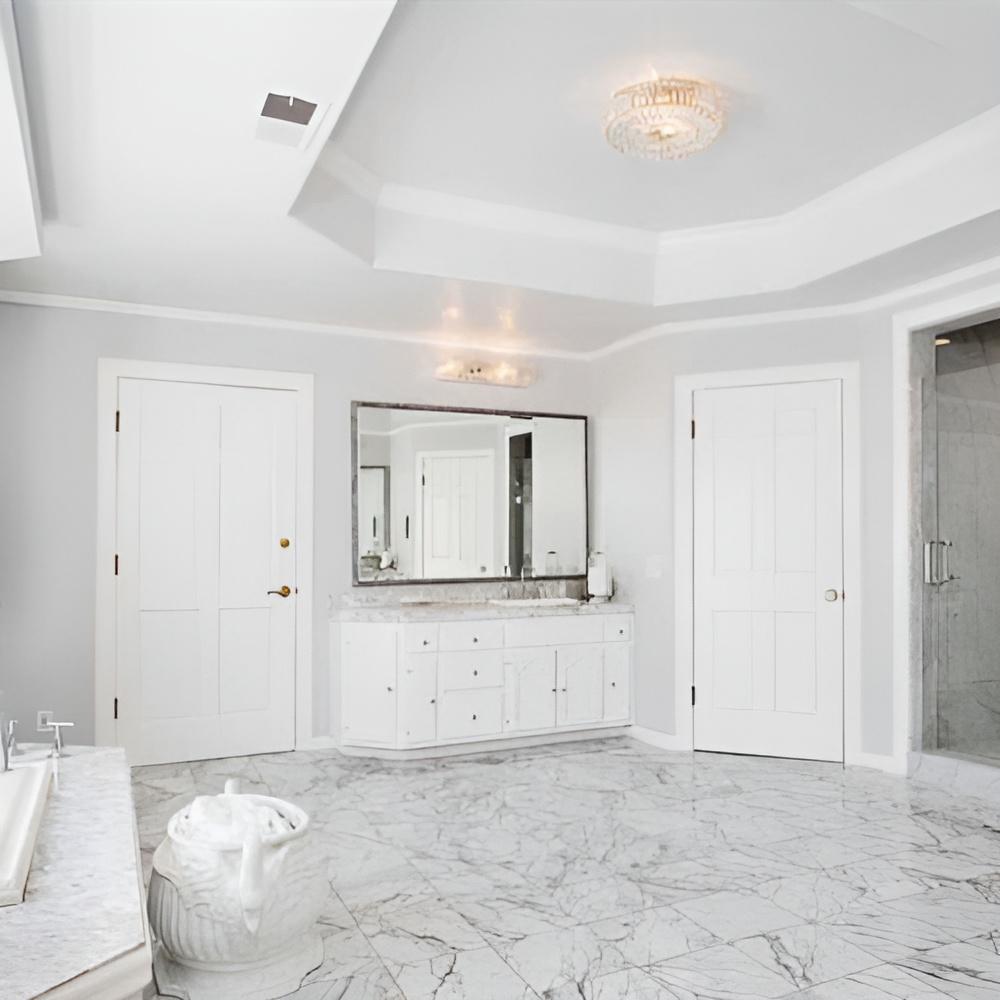
Private, well-appointed bedrooms designed for rest and comfort
Peaceful outdoor spaces ideal for reflection and relaxation.
Chef-prepared meals with nutritious, recovery-focused menus.
Modern common areas that feel warm, livable, and restorative.
On-site wellness amenities, including yoga, mindfulness spaces, fitness center, and a steam sauna.
A discreet Beverly Hills location offering privacy for professionals and high-profile individuals.
Clients from Los Angeles, West LA, Santa Monica, and across California choose Safe Haven Recovery for its combination of luxury, comfort, and exceptional clinical care — a rare blend in the addiction treatment space.
Insurance Coverage for Medical Detox
Medical detoxification is a "medically necessary" procedure covered by most PPO insurance plans. We work with major carriers to minimize your out-of-pocket costs.
Submit your insurance to confirm coverage.









Call Now for Program Availability
Get a confidential consultation and explore your options.
Our friendly support team is here to help.
Medically-Supervised Detox FAQs
Will the detox process be painful?
Our primary goal is to minimize discomfort. Unlike “cold turkey” methods, we use FDA-approved comfort medications and taper protocols to significantly reduce withdrawal symptoms like nausea, anxiety, and shakes. Most clients report feeling sleepy and relaxed rather than in pain.
Why isn't it safe to detox at home?
At-home detox lacks the medical equipment to handle emergencies. Complications like seizures (from alcohol/benzos) or severe dehydration happen quickly. Furthermore, the intense cravings during unassisted withdrawal lead to a relapse rate of nearly 95%, often resulting in overdose.
Does insurance cover medical detox in Beverly Hills, CA?
Yes, most PPO insurance plans (such as Anthem, Aetna, and Blue Shield) cover medical detoxification as a medically necessary service. Our admissions team can verify your specific benefits within the hour to determine your coverage level.
How soon can I be admitted?
We prioritize immediate medical needs and can often arrange same-day admissions for clients in Los Angeles. Call our 24/7 helpline to check current availability and begin the intake process immediately.
How long does medical detox usually take?
The average stay is 5 to 10 days, depending on the substance, duration of use, and your medical history. Alcohol detox is typically 3–7 days, while benzodiazepine tapers may require longer for safety.
At Safe Haven Recovery, detox includes 24/7 clinical supervision, symptom management, comfort-focused care, and a safe transition into residential treatment.
Do you offer private rooms?
Yes. We understand the need for solitude during recovery. We offer beautifully appointed private suites with en-suite bathrooms to ensure your comfort and privacy during the stabilization process.
What medications are used for withdrawal management?
We utilize FDA-approved Medication-Assisted Treatment (MAT) tailored to your needs. This may include Buprenorphine or Naltrexone for opioids, benzodiazepine tapers for alcohol, and various non-narcotic comfort meds for sleep, nausea, and anxiety.
Can I keep my phone or laptop during detox?
We strongly recommend a “digital detox” during this acute phase to allow your brain and body to rest without external stressors. While we understand the need to stay connected to loved ones, device usage is typically limited to designated times to ensure your primary focus remains on medical stabilization and physical rest.
Is my stay completely confidential?
Absolutely. We adhere to strict HIPAA regulations and offer additional NDA protections for high-profile clients. Our facility is unmarked and located in a private residential neighborhood, ensuring total discretion.
Is detox enough to stay sober long-term?
Detox breaks the physical dependence, but it does not treat the underlying addiction. We strongly recommend transitioning immediately into our Residential Rehab Program to address the psychological roots of the behavior and prevent relapse.
Take the First Step Safely
If you’re looking for serenity, calm and quiet while you or a loved one work through addiction therapy, you’ll find it at Safe Haven Recovery Beverly Hills medical detox center.
Perched above Los Angeles on Canyon Drive in Beverly Hills, California, 90210, you’re close to the city, but far enough away to just breathe.
Complete this Form for a
Confidential Consultation
All calls and messages are 100% confidential.
Clinical References & Evidence-Based Research
Center for Substance Abuse Treatment. (2006). Detoxification and Substance Abuse Treatment. NCBI Bookshelf. Available at NCBI.nlm.nih.gov
NIDA. (2018). Types of Treatment Programs: Medical Detoxification. National Institute on Drug Abuse. Available at NIDA.nih.gov
Kleber, H. D. (2007). Pharmacologic treatments for opioid dependence: detoxification and maintenance options. Dialogues in Clinical Neuroscience. Available at PMC
Strang, J., et al. (2003). Loss of tolerance and overdose mortality after inpatient opiate detoxification. BMJ (British Medical Journal). Available at BMJ.com