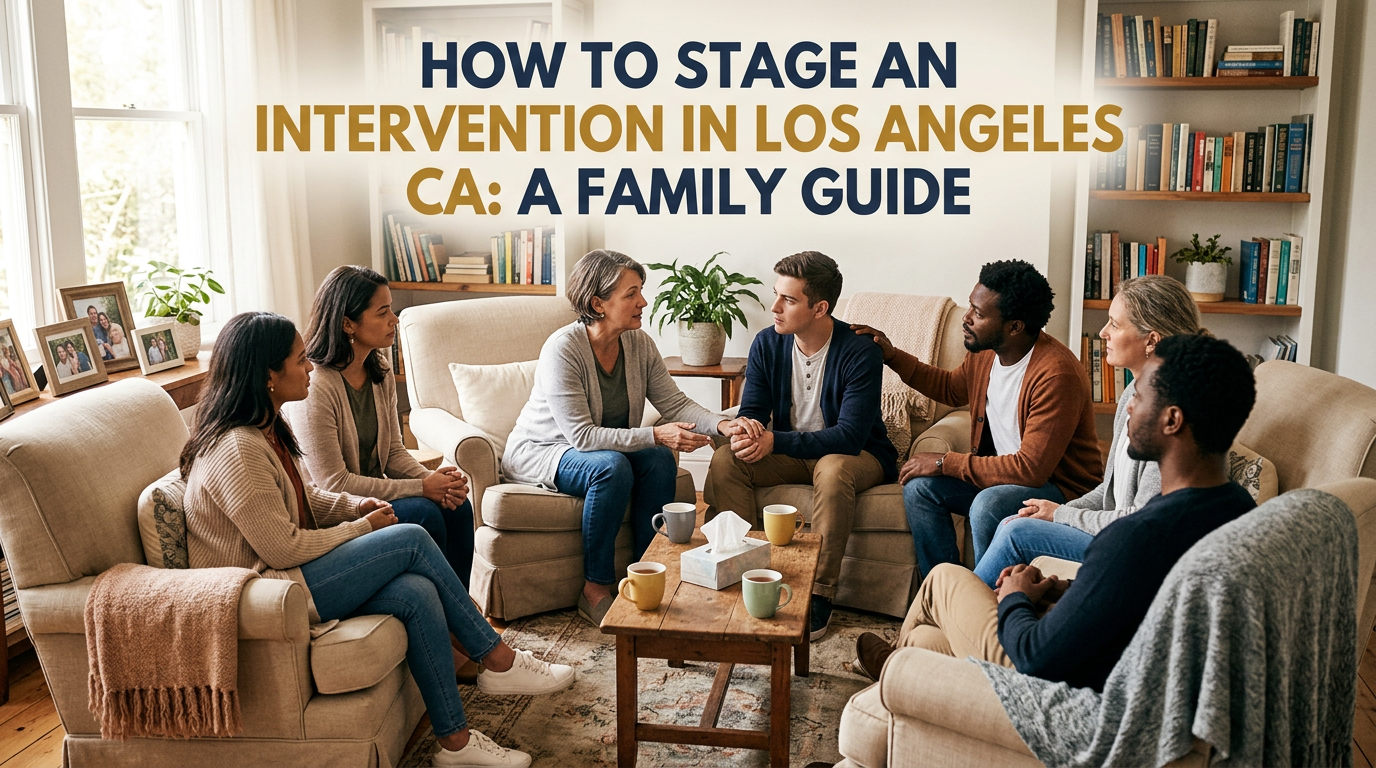
Learning how to stage an intervention los angeles ca requires understanding that it is a highly structured, professionally guided medical meeting. It is not an ambush or an argument. A successful intervention involves a coordinated team of loved ones expressing deep empathy while presenting a non negotiable boundary regarding the individual’s substance abuse. The ultimate goal is to completely dismantle the wall of denial and immediately escort the patient into a secure, residential rehabilitation facility.
The Danger of the DIY Approach
When a family watches a loved one spiral into severe addiction, the natural instinct is to try and fix the problem internally. Families often spend months or years having tearful, one on one arguments with the addict. These informal confrontations almost never yield long term results.
The disease of addiction fundamentally alters the brain’s defense mechanisms. An individual in active addiction operates from a place of profound denial, manipulation, and self preservation. When confronted informally, they will deflect blame, make empty promises to stop tomorrow, or simply walk out of the room. Attempting a disorganized, emotional ambush without clinical guidance usually backfires catastrophically, driving the addicted individual further into isolation. This is precisely why families must utilize structured, proven clinical models when lives are on the line.
The Crucial Role of Professional Interventionists California
Securing the services of an expert is the most critical step in this entire process. Professional interventionists California are licensed behavioral health specialists who are specifically trained in crisis de-escalation, family systems therapy, and addiction psychology.
According to the Association of Intervention Specialists (AIS), an intervention guided by a certified professional has a success rate of over 85 percent in getting the individual to accept treatment that very same day. The interventionist acts as an objective, emotionally detached mediator. Because they are not entangled in the family’s historical grievances or toxic dynamics, they can keep the meeting hyper focused on the single goal of entering rehab.
The professional will spend weeks preparing the family before the addicted individual is ever approached. They will conduct a thorough clinical assessment of the addict’s history, evaluate the family’s codependency levels, and determine exactly which intervention model will be the most effective for your specific situation.
Analyzing the Johnson Model Intervention
The most widely recognized and traditional method utilized in the United States is the Johnson model intervention. Created by Dr. Vernon Johnson in the 1960s, this model operates on the principle that the addicted individual is completely blinded by their disease and requires an immediate, undeniable confrontation with reality.
In a Johnson model intervention, the meeting is kept as a complete surprise to the addict. The interventionist and the family gather in a neutral, private location. The addict is brought to the location under false pretenses. Once there, the family members take turns reading highly structured, pre written letters.
These letters follow a strict formula. They begin with profound expressions of love, detail specific and factual instances where the addiction caused harm, and conclude with the presentation of the treatment option. Crucially, the Johnson model requires every participating family member to establish a severe, non negotiable consequence if the addict refuses treatment. These consequences often include cutting off all financial support, demanding they move out of the family home, or severing contact entirely. The shock value and the absolute firmness of the boundaries are what break the cycle of denial.
Analyzing the ARISE Intervention Method
While the Johnson model is highly effective, it can sometimes be viewed as overly confrontational. A more modern, highly collaborative alternative is the ARISE intervention method. ARISE stands for A Relational Intervention Sequence for Engagement.
Unlike the surprise ambush style, the ARISE method is completely transparent. The addicted individual is actively invited to join the intervention meetings from the very beginning. The process operates on the philosophy that addiction is a disease that affects the entire family unit, not just the individual using the substances.
The ARISE model occurs over three distinct tiers. If the addict refuses to attend the first meeting, the family continues to meet with the professional to learn how to stop enabling the behavior. The pressure is applied gradually and systematically over time. This method is exceptionally effective for highly resistant individuals or families who are incredibly fearful of a sudden, explosive confrontation. It focuses heavily on mobilizing the family’s healthy support network to gently guide the individual into accepting help.
Crafting the Script: What to Say at an Intervention
The most terrifying aspect for family members is figuring out what to say at an intervention. The emotional weight of the moment can cause people to freeze, shout, or deviate from the plan. This is why every single word must be written down on paper ahead of time.
Your intervention letter must remain factual and entirely devoid of anger. The disease of addiction thrives on conflict. If you yell, the addict will yell back, and the message will be completely lost. You must speak directly to the healthy person buried underneath the addiction.
Begin your letter by recalling a specific, fond memory to remind them of who they were before the drugs or alcohol took over. Next, list specific facts without using accusatory language. Do not say, “You always ruin our holidays.” Instead, say, “I felt incredibly frightened and hurt when you passed out at the dinner table last Thanksgiving.” Finally, present the boundary clearly. “I love you too much to watch you die. Because I love you, I will no longer pay your rent if you refuse to accept the help waiting for you today.”
The “Do This, Not That” Communication Matrix
To provide immediate clarity on effective communication, we have developed a clinical communication matrix. This table provides concrete examples of how to reframe your language to de-escalate tension and keep the focus entirely on clinical healing.
| Communication Goal | Do This (Effective, Clinical Language) | Not That (Triggering, Accusatory Language) |
| Expressing Concern | “I am deeply worried about your physical health.” | “You are completely destroying your life.” |
| Stating Facts | “When you drove your car into the mailbox last week, I was terrified.” | “You are a reckless drunk and you never think about anyone else.” |
| Setting Boundaries | “I will no longer provide money that contributes to your illness.” | “I am cutting you off because you are a selfish liar.” |
| Presenting the Solution | “We have a medical team waiting to help you feel better right now.” | “You need to go to rehab or you are going to end up in jail.” |
| Responding to Deflection | “I hear that you are angry, but we are here to talk about getting you treatment today.” | “Stop changing the subject and taking zero responsibility!” |
The Logistics of Getting Someone into Rehab CA
An intervention is entirely pointless if there is no immediate solution ready to be executed. The logistics of getting someone into rehab CA must be completely finalized before the intervention team ever gathers in the living room.
This means that the family must pre select a luxury facility, such as Safe Haven Beverly Hills. You must work with our admissions counselors to verify health insurance benefits, arrange the financial payment plan, and secure a physical bed at the treatment center. The interventionist will ensure that a bag is already packed with the addict’s essential clothing and toiletries.
The timing is critical. Once the individual says the word “yes,” the window of opportunity is incredibly brief. Within minutes of their agreement, they must be escorted to a waiting vehicle and driven directly to the medical detox facility. If you allow them to go to their room to pack or let them promise to check themselves in tomorrow morning, the addiction will regain control of their mind, and the intervention will fail.
Family Addiction Support Beverly Hills: Healing the Unit
It is a clinical reality that addiction destroys families long before it destroys the addicted individual’s physical body. Family members often suffer from profound trauma, chronic anxiety, and severe codependency after years of managing the crisis.
Getting your loved one into a facility is only half of the battle. The other half is engaging in family addiction support Beverly Hills programs to heal your own psychological wounds. While the patient is in residential care undergoing cognitive behavioral therapy and trauma processing, the family must also undergo counseling.
Top tier programs facilitate weekly family therapy sessions, either in person or via telehealth. These sessions teach families how to rebuild broken trust, communicate effectively without enabling, and establish healthy boundaries for when the patient eventually returns home. Healing the family unit ensures that the patient returns to a stable, supportive environment, which drastically reduces their long term risk of relapse.
The Financial Investment and Insurance Navigation
Families frequently delay staging an intervention due to fears surrounding the financial cost of both the interventionist and the subsequent rehabilitation program. However, as discussed in our previous guides, utilizing PPO health insurance can cover a substantial portion of the clinical treatment costs.
While the fee for a professional interventionist is typically an out of pocket expense, it must be viewed as a necessary medical investment. Consider the alternative financial drain of active addiction. The cost of legal fees, property damage, hospital bills, and stolen funds exponentially outweighs the finite cost of hiring an expert to save your loved one’s life. Our admissions team at Safe Haven Beverly Hills works directly with interventionists to streamline the insurance verification process, ensuring that the financial transition into treatment is as seamless and stress free as possible.
Taking the Definitive Step Forward
Watching someone you love slowly kill themselves with drugs or alcohol is an agonizing, paralyzing experience. But you do not have to remain paralyzed. You have the power to change the trajectory of their life today.
Knowing how to stage an intervention los angeles ca simply requires the courage to ask for professional help. By partnering with clinical experts, planning meticulously, and acting entirely out of profound love, you can successfully break the grip of addiction. If you are ready to assemble your team and save a life, contact Safe Haven Beverly Hills immediately. We will connect you with top tier intervention specialists and prepare our medical staff for your loved one’s arrival. The time to act is right now.
Frequently Asked Questions (FAQ)
What is the success rate of getting someone into rehab CA through an intervention?
When guided by a certified professional interventionist, clinical data suggests that interventions have a success rate of over 85 percent in getting the individual to agree to enter treatment on the exact same day.
How does the ARISE intervention method differ from traditional models?
The ARISE method is completely transparent and collaborative. Unlike surprise ambushes, the addicted individual is invited to participate in the planning meetings from the very beginning. It focuses on gradually mobilizing the family’s support network rather than forcing an immediate, highly confrontational ultimatum.
Do I need to hire professional interventionists California, or can we do it ourselves?
It is incredibly highly recommended that you hire a professional. DIY interventions frequently devolve into emotional arguments, driving the addict further away. A professional acts as an objective, medically trained mediator who can de-escalate crisis situations and keep the meeting focused on entering rehab.
What should be included in what to say at an intervention?
Your intervention letter must include a statement of deep love and affection, specific and factual examples of how their addiction has directly harmed you, the presentation of the immediate treatment option, and the strict boundaries you will enforce if they refuse to accept help.
Are there family addiction support Beverly Hills programs available after the intervention?
Yes. Elite treatment centers like Safe Haven Beverly Hills provide comprehensive family therapy programs while your loved one is in residential care. These programs are essential for healing family trauma, curing codependency, and teaching loved ones how to support long-term recovery without enabling past behaviors.